
"How many rest days do I need?" is one of the most searched questions in strength training — and one of the most misunderstood. Many beginners assume rest is lost time. It is the opposite: you break muscle down in the gym and build it back during recovery. Train without enough rest and you are not dedicated, you are just digging a hole you never climb out of.
A useful rule of thumb: most muscles need at least 48 hours before you train them hard again. Large compound work — heavy squats and deadlifts taken close to failure — can need closer to 72 hours, especially as loads rise. Smaller muscles often recover faster. This is exactly why splits exist: an upper/lower or push/pull/legs plan lets you train on consecutive days because different muscles work while others recover. Rest days are counted per muscle, not just per calendar.
It also means weekly volume matters more than the exact split. Research on training frequency generally finds that, when total weekly sets are matched, how you spread them across the week matters less than getting the work in and recovering from it. A practical target for most lifters is roughly 10–20 hard sets per muscle group per week, progressed gradually.
A rest day is a day off hard training — not a day glued to the couch. Walking, easy cycling, gentle mobility work and light stretching are all excellent on rest days; this "active recovery" often reduces soreness instead of adding to it. What does not count: a "light" session that quietly becomes heavy, hard conditioning on every off day, or training the same sore muscle again because the calendar said so.
Take more rest if: your performance is going backwards, soreness never fully clears, sleep quality drops, resting motivation disappears, or small aches start collecting in joints. You can try one fewer rest day if: you finish sessions feeling fresh, performance rises week to week, and next-day fatigue is minimal. Change one variable, watch it for two to three weeks, then decide. Recovery, like training, is an experiment with a sample size of one: you.
Beginner week: full-body Monday, Wednesday, Friday; walk on Tuesday and Saturday; fully off Sunday. Intermediate week: upper Monday, lower Tuesday, rest Wednesday, upper Thursday, lower Friday, weekend light or off. Either way, protect sleep (7–9 hours), eat enough protein, and treat rest days as part of the program — because biologically, they are the program. The workout is the stimulus. Rest is when the result happens.
Want a plan where the training days and the rest days are already laid out for your goal? Our ready-to-follow Personalized Training Plans in the shop are built exactly that way — and if your goal is not there yet, join the waitlist and tell us what you need.
Programs, recipes and services to accelerate your transformation.
See the shop Training
Forget complicated splits. Three full-body sessions a week, six movement patterns, and a simple progression plan — everything a beginner needs.
Read article →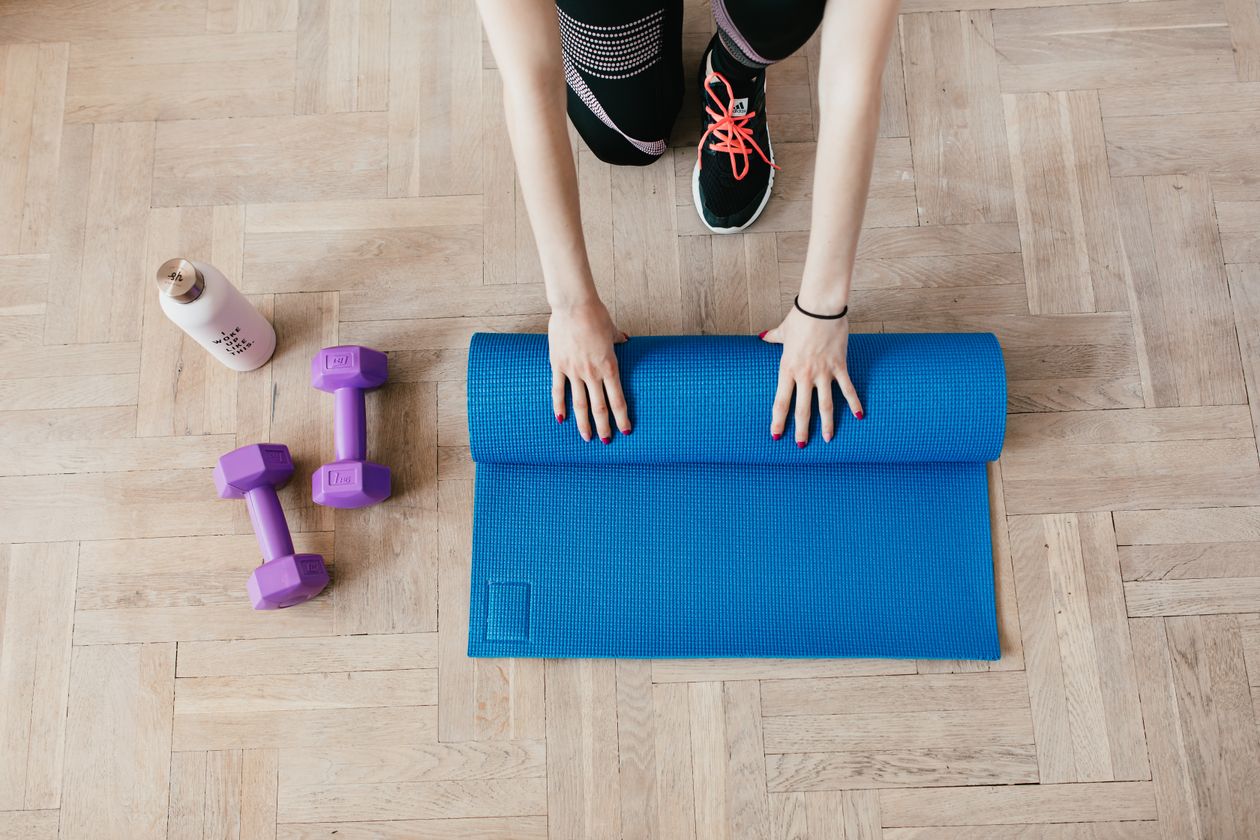 Training
No commute, no crowds, no excuses. A complete 30-minute full-body home session — plus how to keep making it harder as you get stronger.
Read article → Training
Push/pull/legs, upper/lower, bro split — what they actually mean, who each one is for, and how to match your split to the days you really have.
Read article →Ready-made training spreadsheets built by a certified coach — pick your goal and follow the plan, no consulting needed. Plus diet and recipe ebooks.
See the shop AMERICAN TRAINER INSTITUTE